
.png?width=880&length=880&name=Untitled%20design%20(65).png)
The Best Decodable Books for Kindergarten (A Guide for the Overwhelmed)
If you've just started looking for decodable books for your kindergartner (as a teacher building a classroom library or a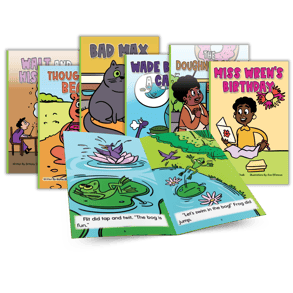 parent trying to support the reader at your kitchen table), take a breath. It's a lot. There are a hundred series, three different definitions of "decodable," and everyone online seems to have strong opinions about “the best” scope and sequence. You don't need a degree in phonics to get this right. You just need a few clear things to look for and someone to walk through it with you. That's what we're here for.
Key takeaways
- A decodable book only works if it matches the specific phonics skills your kindergartner has actually been taught, not just their grade level.
- Look for books that sound like real sentences, not word-list drills, and that feature characters and stories kids actually want to read.
- "UFLI-aligned decodable books" means the titles map to a specific, research-backed phonics sequence: a good signal of quality, if the alignment is real.
- Laprea Education's Developing Decoders Green K Collection and Purple Collection boxed sets are two approachable entry points and are available in print or digital.
Why decodable books matter so much in kindergarten
Here's the thing about early readers: They're working with a very small toolbox. A kindergartner who's just learned short vowels and a handful of consonant sounds can't yet sound out a book full of complex vowel patterns and irregular words. And as we know…when they hit a word they can't decode, it's easy for that little brain to decide "reading is hard" long before it decides "I just haven't learned that letter combo yet."
Decodable books solve this by only using the letter–sound patterns a child has actually been taught, plus a small, carefully chosen set of high-frequency words. It means every page is a win your kindergartner can actually get to on their own, and if you've ever watched a five-year-old's face light up after finishing a book solo, you know that's worth its weight in gold stars.
What to look for in the best decodable books for kindergarten
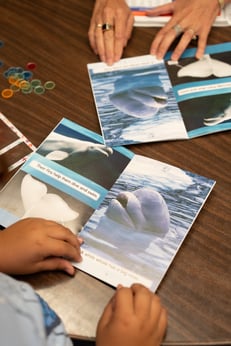 Skill match, not just grade level. "Kindergarten" covers a huge range: A September kindergartner and a May kindergartner are working with very different skill sets. Look for books organized by specific phonics skill (like short vowels, digraphs, or blends) rather than just a broad "K" label.
Real stories, not word lists in disguise. Controlled vocabulary doesn't have to mean boring. The best decodable books manage to tell an actual story with interesting characters and a little humor or introduce fascinating nonfiction topics while still keeping the phonics demands appropriate.
A clear, checkable scope and sequence. This is where the phrase "UFLI-aligned decodable books" comes up a lot these days. UFLI Foundations is a well-researched phonics resource developed by the University of Florida Literacy Institute. Books that are aligned to it are mapped skill by skill, so you always know exactly what a title is asking of your reader.
Our recommendation: Developing Decoders (Green K & Purple)
We're Laprea Education, so we'll be transparent: This is our own series, and we built it because we were frustrated by the same gaps you probably are. Developing Decoders is written by teachers for teachers to align with UFLI's scope and sequence (it's featured in UFLI's own decodable text guide) and designed to be genuinely enjoyable, not just technically correct.
For kindergarten specifically:
- The Green Fiction and Nonfiction Collections include kindergarten-level sets as part of a full K–2 progression, so your child (or your whole class) has room to grow into the next skill without switching series.
- The Purple Collection boxed sets ($29.99 each) are organized by syllable type (starting with closed syllables and blends, which is exactly where most kindergartners begin), so you can start small and add sets as skills build.
- Everything is also available through the Developing Decoders Digital Library, with a free account to get started, which is a nice low-pressure way to try it out before committing to a full physical set.
A few FAQs we hear a lot
My kindergartner already knows some high-frequency words. Do they still need decodable books? Yes! Knowing high-frequency words is a great start, but children also need to learn how to read words they haven’t seen before. Decodable books give them practice applying the phonics patterns they’ve been taught while also building fluency with familiar high-frequency words. Both skills work together to help children become confident, independent readers.
How do I know which skill level to start at? Start with whatever your child's teacher says they're currently working on (or, if you're the teacher, wherever your most recent phonics assessment lands). If you're not sure, books featuring simple CVC words are a safe, common starting point for early kindergarten.
Is "UFLI-aligned" the same as "the UFLI program"? Not quite. UFLI Foundations is the phonics program itself; "UFLI-aligned" describes books written to match that program's scope and sequence so you can use them alongside it (or any similarly structured phonics instruction).
The Bottom Line
You don't have to have this all figured out today. Start with your kindergartner's current skill level, look for books that are genuinely aligned to a real scope and sequence, and pick a format you'll actually stick with. That's really the whole formula for finding the best decodable books for kindergarten.
Ready to see what a UFLI-aligned, kindergarten-friendly library looks like? Explore the Developing Decoders collections here and find the starting point that fits your reader.
.png?width=960&length=960&name=Untitled%20design%20(63).png)
.png?width=960&length=960&name=Untitled%20design%20(66).png)
.png?width=960&length=960&name=Landing%20Page%20Backgrounds%20(9).png)