

Click here to download the PDF of this white paper.
In recent decades, research in reading development and instruction has helped educators better understand one essential truth: strong readers must be able to decode words accurately and efficiently, transforming printed symbols into spoken language and meaning (Seidenberg, 2017). As a result, schools across the country have renewed their focus on explicit, systematic phonics instruction. Research consistently demonstrates that phonics is a critical component of early reading success (National Reading Panel, 2000; Shaywitz, 2003; Foorman, et al., 2016).
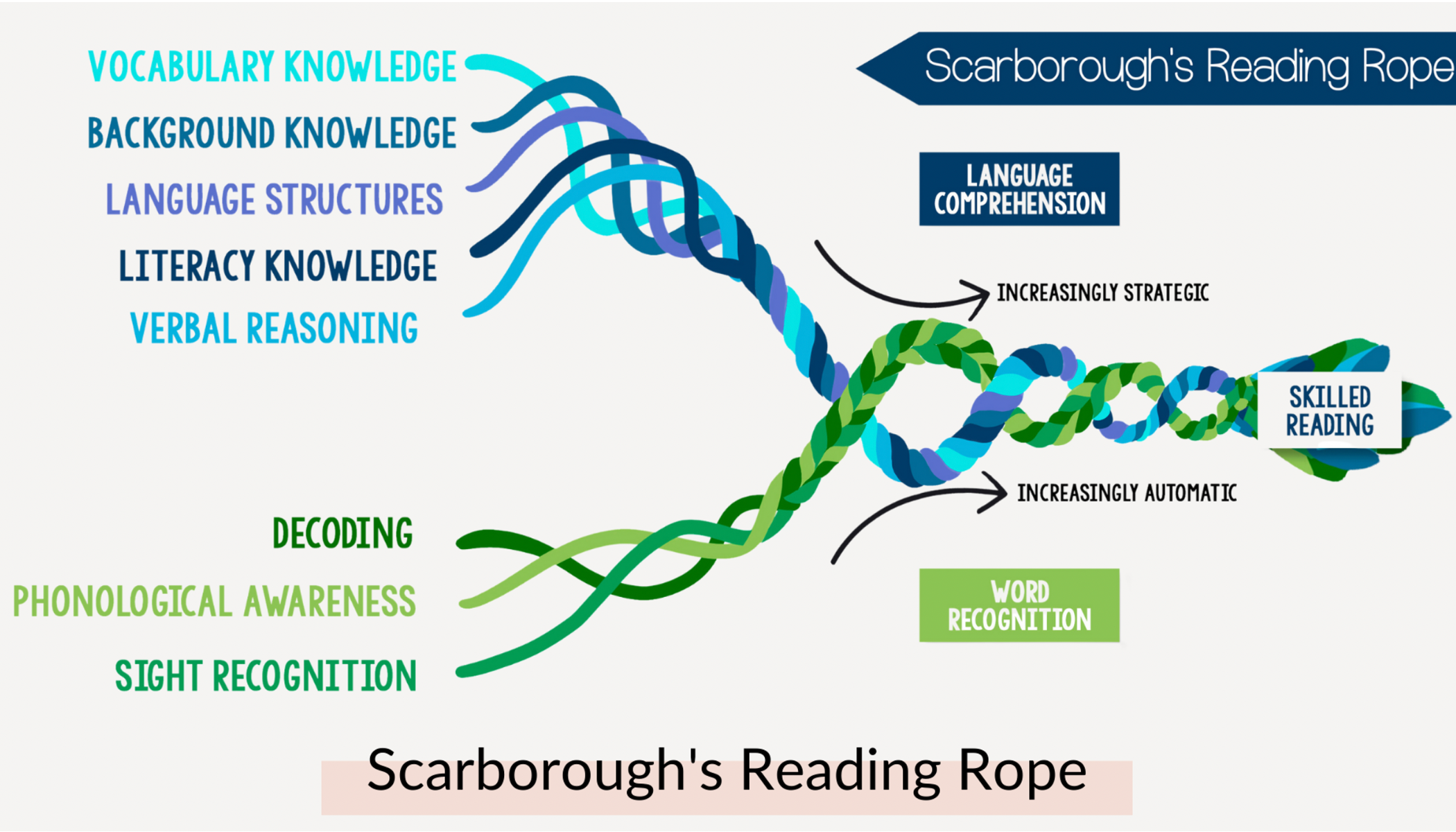
At the same time, classroom data and research findings suggest an important reality: accurate word reading does not always translate into strong reading comprehension. Some students can read the words on a page accurately but still struggle to explain what they have read, answer questions, make inferences, or engage in meaningful discussions about text. The importance of language comprehension is reflected in both the Simple View of Reading and Scarborough’s Reading Rope, which identify language comprehension and word recognition as essential, interdependent contributors to skilled reading (Gough & Tunmer, 1986; Scarborough, 2001). Students with poor reading comprehension frequently exhibit underlying weaknesses in oral language, including vocabulary and language comprehension, even when their decoding skills are age-appropriate (Catts et al., 2006). These findings reinforce an important conclusion: decoding is necessary for reading, but it is not sufficient.
This distinction is especially important when using decodable texts. Decodable texts provide valuable opportunities for students to apply newly taught phonics skills in connected reading. However, if instruction focuses exclusively on accurate decoding, educators risk missing opportunities to develop the language and comprehension skills that ultimately determine whether students understand what they read.
Too often, literacy conversations position phonics and comprehension as competing priorities when, in reality, both are necessary for reading success. Strong readers develop word recognition and language comprehension simultaneously (Gough & Tunmer, 1986; Hoover & Gough, 1990). As students learn to decode increasingly complex words, they also need opportunities to discuss ideas, build vocabulary, deepen background knowledge, and make meaning from text.
 At Laprea Education, our decodable texts are carefully written and aligned to a systematic phonics scope and sequence, providing students with opportunities to apply newly taught skills in connected text with a high degree of success. Through controlled text, cumulative review, and purposeful skill progression, students develop the word recognition abilities that form the foundation of skilled reading.
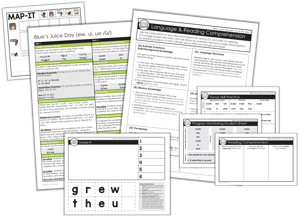 At the same time, we recognize skilled reading requires more than accurate decoding. Each decodable text is paired with lesson plans designed to strengthen word recognition while simultaneously developing comprehension. Using the language comprehension strands of the Reading Rope, our lesson plans provide vocabulary instruction, oral language discussions, activities to build background knowledge, support for comprehension, and opportunities for verbal reasoning. Rather than treating word recognition and language comprehension as separate instructional priorities, we intentionally connect them, helping students develop both the ability to read words and the ability to make meaning from what they read.
The Foundation: Why Phonics Matters
Any discussion about reading comprehension must begin with a clear acknowledgment of the importance of phonics instruction.
Research has consistently demonstrated that skilled reading depends on the ability to recognize words accurately and efficiently. For beginning readers, this process requires learning the relationships between phonemes and graphemes and applying that knowledge to decode unfamiliar words. Systematic, explicit phonics instruction helps students develop these skills, leading to improvements in word reading, spelling, and overall reading achievement (National Reading Panel, 2000; Ehri et al., 2001).
The emphasis on phonics within science-of-reading initiatives has helped correct a long-standing misconception that reading develops naturally through exposure to books alone. While some students learn to decode with minimal instruction, most require explicit teaching to understand how the alphabetic system works (Young & Hasbrouck, 2024). Research consistently shows that students benefit when phonics skills are taught in a deliberate sequence, reinforced through practice, and connected to authentic reading experiences (Foorman et al., 2016).
Phonics instruction is particularly important because it supports the development of automatic word recognition (Ehri, 2022). As students become more proficient at decoding, they devote less mental effort to identifying individual words and have more cognitive resources available for understanding the text.
 However, while phonics is necessary, it is not the ultimate goal of reading instruction. The purpose of reading is not simply to identify words accurately but to construct meaning from text (Snow, 2002). Students who can decode every word in a passage but cannot explain what happened, identify the author’s message, or connect ideas across the text are not yet proficient readers. To fully understand written language, students must also develop the language comprehension skills that allow them to make sense of what they read.
The Missing Link: Language Comprehension
Reading comprehension is the process of constructing meaning from text (Snow, 2002). While decoding allows readers to identify the words on a page, language comprehension enables them to understand those words, connect ideas, make inferences, and learn from what they read. Without language comprehension, reading becomes little more than word calling.
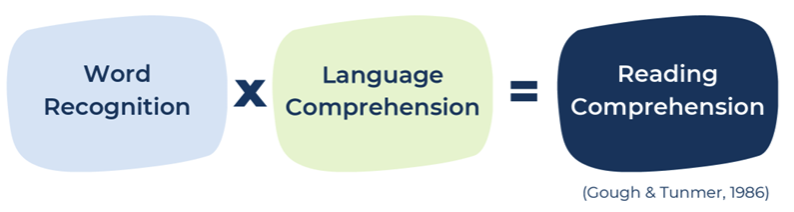
The importance of language comprehension is reflected in the Simple View of Reading, which identifies reading comprehension as the product of two broad skill sets: decoding and language comprehension (Gough & Tunmer, 1986; Hoover & Gough, 1990). This relationship is multiplicative rather than additive, meaning that weaknesses in either component can significantly limit reading success. Students need both the ability to recognize words and the ability to understand language in order to comprehend text.
Scarborough’s Reading Rope further highlights the strands that contribute to language comprehension, including background knowledge, vocabulary, language structures, verbal reasoning, and literacy knowledge (Scarborough, 2001). Together, these interconnected strands help readers understand increasingly complex texts, make connections among ideas, and construct meaning from what they read.
Research has demonstrated that weaknesses in language comprehension can significantly impact reading achievement. In a longitudinal study of children with poor reading comprehension, Catts and colleagues (2006) found that many students who struggled to understand text exhibited deficits in vocabulary, grammar, and broader language skills despite having adequate word-reading abilities. These students could decode successfully, but they lacked the language foundation necessary to construct meaning from text.
As schools have strengthened phonics instruction, many students have experienced improved outcomes in foundational reading skills. At the same time, improving word recognition does not eliminate the need for intentional instruction in vocabulary, oral language, and comprehension. If the goal of reading is meaning-making, then language comprehension cannot be treated as an afterthought. Effective literacy instruction recognizes that decoding and language comprehension are not competing priorities but complementary components of skilled reading.
Why Decodable Texts Alone Are Not Enough
Decodable texts have become a central component of science-of-reading aligned instruction, and for good reason. When thoughtfully designed and used as intended, decodable texts provide students with opportunities to apply newly taught phonics skills in connected reading, allowing students to practice and consolidate phonics skills in meaningful text as recommended by Blevins (2017). Unlike predictable texts that often encourage guessing based on pictures or context, decodable texts require students to attend to the letters and sounds in words, reinforcing the alphabetic principle and strengthening decoding proficiency.
Research supports the use of decodable texts as a bridge between phonics instruction and authentic reading (Mesmer, 2005; Cheatham & Allor, 2012). As students encounter words containing previously taught phonics patterns, they gain opportunities to practice accurate word recognition, develop fluency, and build confidence as readers.
However, decodable texts were never intended to serve as the entirety of literacy instruction. Their primary purpose is to provide practice with specific phonics patterns, not to address every aspect of reading development. When instruction focuses exclusively on accurate decoding, important opportunities for language and comprehension development can be overlooked.
Consider a student who successfully reads the following sentence from the nonfiction decodable text, You Can Win: "It is in the net."
The student may decode every word accurately and read the sentence fluently. Yet successful reading requires more than word identification. Does the student understand what a net is? Can the student explain what happened when the ball went into the net and why that is important in a soccer game? Can the student connect this information to their knowledge of how goals are scored? Can the student retell the information presented in the passage, explain the significance of the event, or discuss what they learned about the game of soccer? These questions move beyond decoding and into comprehension.
This distinction becomes increasingly important as students progress through the grades. Early phonics instruction helps students learn how to read words, but long-term reading success depends on students’ ability to construct meaning from increasingly complex texts and use reading as a tool for learning (Scarborough, 2001; Duke & Cartwright, 2021). Students must acquire vocabulary, build knowledge about the world, understand increasingly complex language structures, and engage in meaningful discussions about what they read, all of which contribute to reading comprehension and academic achievement (Snow, 2002; Cervetti & Wright, 2020; Shanahan et al., 2010). These skills do not develop automatically as a byproduct of accurate decoding; rather, they require intentional instruction and opportunities for language and knowledge development (National Reading Panel, 2000; Duke & Cartwright, 2021).
For this reason, the most effective use of decodable texts extends beyond phonics practice.
Decodable texts should serve as a platform for language development and meaning-making.
Teachers can use them to introduce and reinforce vocabulary, build oral language, engage students in discussion, strengthen comprehension, and connect reading to broader knowledge-building goals.
The question, therefore, is not whether schools should use decodable texts, as the evidence strongly supports their role in developing foundational reading skills. The more important question is how decodable texts can be leveraged to support the full range of skills required for proficient reading.
.jpg?width=5040&height=3360&name=GRCurriculum-151%20(1).jpg)
From Practice to Understanding: Integrating Decoding and Comprehension
If reading success depends on both word recognition and language comprehension, then instructional materials must intentionally develop both.
While some materials provide strong phonics instruction and others emphasize comprehension, fewer are designed to systematically integrate both strands of skilled reading within a coherent instructional sequence. Reading researchers have increasingly argued that effective literacy instruction must integrate support for both word recognition and language comprehension rather than treating these domains as separate instructional priorities (Duke & Cartwright, 2021; Duke, 2021).
At Laprea Education, we believe that students should not have to wait until they become proficient decoders before engaging in meaningful language and comprehension work.
Instead, decoding and comprehension should develop alongside one another, with instruction designed to support the cognitive demands of learning to read while simultaneously building meaning.
This approach is grounded in Cognitive Load Theory, which suggests that working memory has limited capacity (Sweller, 1988; Sweller, Ayres, & Kalyuga, 2011). Beginning readers devote substantial mental effort to decoding unfamiliar words. When cognitive demands exceed available working memory, comprehension can suffer. For this reason, effective instruction must carefully manage cognitive load by reducing unnecessary demands and introducing new learning in a purposeful sequence.
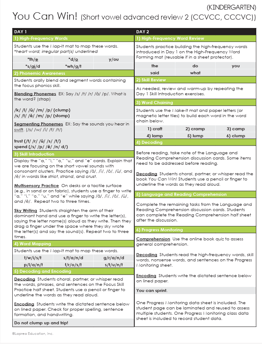 Laprea lesson plans are designed with this principle in mind. Every Developing Decoders text includes a corresponding two-day lesson sequence that intentionally integrates the word recognition and language comprehension strands of Scarborough’s Reading Rope. Students first receive explicit instruction and structured practice with target phonics concepts before applying those skills in connected text. By reducing the cognitive demands associated with decoding, this sequence helps free working memory resources for comprehension, allowing students to focus more fully on constructing meaning from what they read.
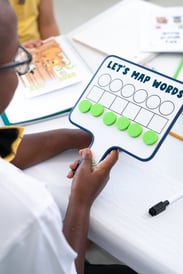
Day 1 places greater emphasis on the word-recognition strands of the Reading Rope, including phonological awareness, decoding, and sight recognition of familiar words. Students engage in explicit instruction and structured practice designed to strengthen the foundational skills necessary for accurate and increasingly automatic word reading. As part of this practice, students read words, phrases, and sentences drawn directly from the decodable text they will encounter on Day 2. These activities help reduce the cognitive demands associated with decoding and provide a scaffold into connected text reading.
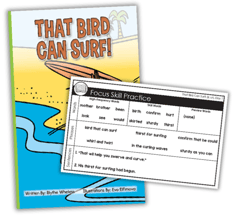 Day 2 continues to reinforce the target phonics skill while expanding opportunities for language comprehension. Students revisit previously taught concepts, engage in word chaining and connected reading, and read the complete decodable text introduced through Day 1 practice. Students then participate in structured discussions and comprehension activities that strengthen the language comprehension strands of Scarborough’s Reading Rope, including vocabulary, language structures, verbal reasoning, background knowledge, and literacy knowledge. Because students have already received explicit instruction and practice with the target skill and have encountered key words and sentences from the text, they are better positioned to devote attention to understanding, discussing, and making meaning from what they read.
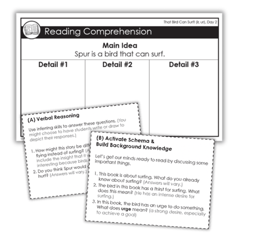 Across both days, instruction is designed to address the interconnected strands of Scarborough’s Reading Rope. Students strengthen phonological awareness, decoding, and sight recognition while simultaneously building vocabulary, background knowledge, language structures, verbal reasoning, and literacy knowledge. Rather than viewing decoding and comprehension as separate goals, the lesson design recognizes that skilled reading develops through the interaction of both. This reflects research suggesting that language comprehension and word recognition develop most effectively when both are addressed throughout literacy instruction rather than in isolation (Duke & Cartwright, 2021).
Implications for Educators and School Leaders
The science of reading has transformed literacy instruction by bringing renewed attention to the importance of explicit, systematic phonics instruction. This shift has helped educators better understand how students learn to decode words and has improved foundational reading outcomes for many learners. Yet the research is equally clear that decoding is only one component of skilled reading.
The implications for educators are significant. Schools should resist framing literacy instruction as a choice between phonics and comprehension. Instead, instructional decisions should be guided by the understanding that word recognition and language comprehension develop together, and both are necessary for reading success. Students need opportunities to learn how written language works while simultaneously developing the vocabulary, knowledge, reasoning, and language skills that enable them to construct meaning from text.
This understanding has important implications for curriculum evaluation and instructional design. When selecting literacy materials, educators should look beyond whether a program includes phonics instruction or decodable texts. They should also consider whether materials provide intentional opportunities to develop vocabulary, oral language, background knowledge, and verbal reasoning.
Strong literacy resources, including decodable texts, should support all strands of Scarborough's Reading Rope, not just those related to word recognition.
The implications extend beyond instructional materials to classroom practice. Even during the earliest stages of reading development, students can engage in meaningful conversations about text, learn new vocabulary, build knowledge, and respond to questions that require reasoning and reflection. Comprehension instruction should not be viewed as something that begins after students master decoding. Rather, comprehension development should be woven throughout literacy instruction from the very beginning.
For school and district leaders, these findings underscore the importance of supporting comprehensive implementation of science-of-reading practices. Professional learning should help educators understand both foundational skills and language comprehension, assessment systems should monitor growth in both domains, and curriculum resources should provide teachers with practical tools for integrating decoding and meaning-making rather than treating them as separate instructional priorities.
The most effective literacy instruction recognizes this reality. It does not position phonics and comprehension as competing priorities. Instead, it intentionally develops both. As students learn to recognize words with increasing accuracy and automaticity, they must also build vocabulary, background knowledge, language structures, verbal reasoning, and literacy knowledge. Skilled reading emerges when these strands work together.
The Path Forward
Decodable texts provide valuable opportunities for students to apply newly taught phonics skills in connected reading while developing increasingly automatic word recognition. At Laprea Education, our Developing Decoders texts were designed around these principles, combining systematic phonics practice with instructional supports that extend opportunities for word recognition and language comprehension development.
This belief guides the design of every Developing Decoders book and lesson plan. By integrating the word-recognition and language-comprehension strands of Scarborough’s Reading Rope, Developing Decoders is designed to support both accurate word reading and meaningful comprehension. Rather than treating these domains as separate instructional priorities, each text and accompanying lesson plan is designed to help students simultaneously strengthen the skills that support successful reading.
Decodable texts remain one of the most powerful tools available for developing foundational reading skills. The challenge is not whether to use decodable texts, but how to ensure they support the full range of skills required for skilled reading. At Laprea Education, we believe the strongest decodable texts do both.
"Strong literacy resources, including decodable texts, should support all strands of Scarborough's Reading Rope, not just those related to word recognition."
References
Blevins, W. (2017). A fresh look at phonics: Common causes of failure and 7 ingredients for success. Corwin.
Catts, H. W., Adlof, S. M., & Weismer, S. E. (2006). Language deficits in poor comprehenders: A case for the simple view of reading. Journal of Speech, Language, and Hearing Research, 49(2), 278–293.
Cervetti, G. N., & Wright, T. S. (2020). The role of knowledge in understanding and learning from text. In E. B. Moje, P. Afflerbach, P. Enciso, & N. K. Lesaux (Eds.), Handbook of Reading Research (Vol. 5, pp. 385–400). Routledge.
Cheatham, J. P., & Allor, J. H. (2012). The influence of decodability in early reading text on reading achievement: A review of the evidence. Reading and Writing, 25(9), 2223–2246.
Duke, N. K. (2021). The science of reading comprehension instruction. The Reading Teacher, 74(6), 663–672.
Duke, N. K., & Cartwright, K. B. (2021). The science of reading progresses: Communicating advances beyond the simple view of reading. Reading Research Quarterly, 56(S1), S25–S44.
Ehri, L. C. (2022). The science of learning to read words: A case for systematic phonics instruction. Reading Research Quarterly, 57(S1), S45–S60.
Ehri, L. C., Nunes, S. R., Stahl, S. A., & Willows, D. M. (2001). Systematic phonics instruction helps students learn to read: Evidence from the National Reading Panel’s meta-analysis. Review of Educational Research, 71(3), 393–447.
Foorman, B. R., Beyler, N., Borradaile, K., Coyne, M., Denton, C. A., Dimino, J., Furgeson, J., Hayes, L., Henke, J., Justice, L., Keating, B., Lewis, W., Sattar, S., Streke, A., & Wissel, S. (2016). Foundational skills to support reading for understanding in kindergarten through 3rd grade. National Center for Education Evaluation and Regional Assistance, Institute of Education Sciences, U.S. Department of Education.
Gough, P. B., & Tunmer, W. E. (1986). Decoding, reading, and reading disability. Remedial and Special Education, 7(1), 6–10.
Hoover, W. A., & Gough, P. B. (1990). The simple view of reading. Reading and Writing, 2(2), 127–160.
Lambert, S. (Host). (2025, September 10). The (not so) simple view of reading, with Wesley Hoover, Ph.D. (Season 10, Episode 1) [Audio podcast episode]. In Science of Reading: The Podcast. Amplify.
Mesmer, H. A. E. (2000). Decodable text: A review of what we know. Reading Research and Instruction, 40(2), 121–141.
National Institute of Child Health and Human Development. (2000). Report of the National Reading Panel: Teaching children to read (NIH Publication No. 00-4769). U.S. Government Printing Office.
Scarborough, H. S. (2001). Connecting early language and literacy to later reading (dis)abilities: Evidence, theory, and practice. In S. B. Neuman & D. K. Dickinson (Eds.), Handbook of Early Literacy Research (pp. 97–110). Guilford Press.
Seidenberg, M. S. (2017). Language at the speed of sight: How we read, why so many can’t, and what can be done about it. Basic Books.
Shanahan, T., Callison, K., Carriere, C., Duke, N. K., Pearson, P. D., Schatschneider, C., & Torgesen, J. (2010). Improving reading comprehension in kindergarten through 3rd grade (NCEE 2010-4038). National Center for Education Evaluation and Regional Assistance, Institute of Education Sciences, U.S. Department of Education.
Shaywitz, S. E. (2003). Overcoming dyslexia: A new and complete science-based program for reading problems at any level. Alfred A. Knopf.
Snow, C. E. (2002). Reading for understanding: Toward an R&D program in reading comprehension. RAND Corporation.
Sweller, J. (1988). Cognitive load during problem solving: Effects on learning. Cognitive Science, 12(2), 257–285.
Sweller, J., Ayres, P., & Kalyuga, S. (2011). Cognitive load theory. Springer.
Young, N., & Hasbrouck, J. (Eds.). (2024). Climbing the ladder of reading and writing: Meeting the needs of all learners. Benchmark Education Company.
.png?width=960&length=960&name=Untitled%20design%20(56).png)
.png?width=960&length=960&name=Landing%20Page%20Backgrounds%20(1).png)
.png?width=960&length=960&name=Landing%20Page%20Backgrounds%20(8).png)