
.png?width=880&length=880&name=Untitled%20design%20(60).png)
Click here to download the PDF of this white paper.
In many classrooms, the reading of a decodable text serves as the final step in a phonics lesson. Students read the story, demonstrate accurate decoding, and move on to something entirely different.
But what if the decodable text was not the endpoint of the lesson, but the first step toward meaningful writing? Decades of research demonstrate that reading and writing develop reciprocally, drawing upon shared knowledge of phonology, orthography, syntax, semantics, and comprehension (Berninger, 2000; Tierney & Shanahan, 1991). Reading provides the language, knowledge, and models that support writing, while writing strengthens reading by requiring students to actively retrieve and apply the same linguistic knowledge used for skilled decoding (Graham & Hebert, 2011; Philippakos & MacArthur, 2023).
Despite this reciprocal relationship, writing often remains disconnected from carefully sequenced foundational reading instruction. Students may apply a newly taught phonics pattern while reading a decodable text, yet the lesson frequently ends before they have an opportunity to encode those same patterns through purposeful writing. As a result, an important opportunity for reinforcement is lost, and writing becomes a separate instructional activity rather than a natural extension of the reading process.
Reimagining the role of decodable texts offers a practical solution. Rather than serving solely as practice for accurate decoding, decodable texts can function as the instructional blueprint for integrated literacy instruction. After students read a decodable text, that same text becomes the foundation for purposeful writing. Students revisit its ideas, vocabulary, phonics patterns, sentence structures, and language as they move from decoding to encoding. Just as a blueprint guides every stage of construction, the decodable text can guide every stage of literacy instruction that follows. Instead of asking students to generate ideas, language, and spelling patterns entirely on their own, teachers leverage the text students have just read as the scaffold for meaningful writing. In doing so, writing becomes a natural extension of reading that reinforces phonics, spelling, sentence construction, language, and comprehension while reducing unnecessary cognitive demands (Sweller, 1988; Hochman & Wexler, 2024).
Viewed through this lens, a single decodable lesson extends far beyond phonics practice. The same text can support dictation, sentence construction, syntax instruction, vocabulary development, text organization, and written responses that deepen comprehension. Rather than treating these as isolated activities, teachers intentionally build each experience from the shared foundation of the decodable text. In doing so, one carefully designed lesson supports multiple strands of the Writing Rope while reinforcing the orthographic, linguistic, and conceptual knowledge that contributes to skilled reading (Sedita, 2023). Research consistently demonstrates that writing about text strengthens spelling, orthographic mapping, comprehension, and long-term retention, making writing not simply a product of reading instruction but a powerful contributor to reading development itself (Graham & Hebert, 2011; Graham et al., 2012; Moats, 1995).
This paper argues that decodable texts should be viewed not as the conclusion of phonics instruction, but as the instructional blueprint for integrated literacy instruction. By intentionally extending every decodable reading lesson into purposeful writing, educators can transform a single text into the foundation for strengthening encoding, language, comprehension, and written expression. The pages that follow explore how decodable texts can serve as the blueprint for writing experiences that reinforce every strand of the Writing Rope while maximizing the impact of foundational literacy instruction.
The Cognitive Architecture of Writing
Writing is one of the most cognitively demanding tasks students encounter in school. Unlike reading, where words already exist on the page, writing requires students to generate ideas, retrieve vocabulary, recall spelling patterns, construct sentences, apply conventions, and physically produce written text, all while monitoring whether their message makes sense. These processes occur simultaneously, placing substantial demands on working memory (Hochman & Wexler, 2024).
According to Sweller's Cognitive Load Theory, learning depends on the interaction between working memory and long-term memory (Sweller, 1988; Sweller et al., 2011). Working memory serves as a limited-capacity system that can handle only a small amount of new information at any given time. As learners acquire knowledge, however, they organize information into schemas stored in long-term memory. These schemas allow multiple pieces of information to function as a single unit, reducing the burden on working memory and enabling increasingly automatic performance.
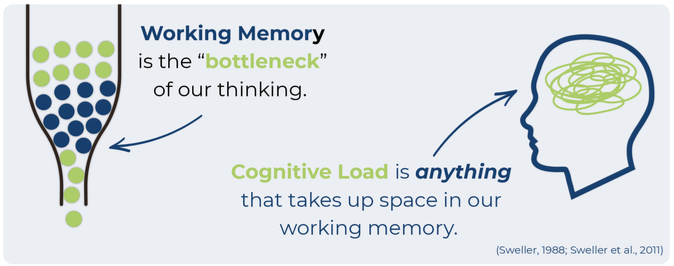
This distinction is especially important for beginning writers. Experienced writers possess well-developed schemas for spelling, sentence construction, handwriting, and text organization, allowing many of these processes to occur with little conscious effort. Novice writers, however, are still developing these schemas. Even composing a simple sentence may require them to consciously think about letter formation, phoneme-grapheme correspondences, spelling patterns, capitalization, punctuation, syntax, vocabulary, and meaning simultaneously. Because each of these elements competes for limited working memory, writing can quickly become overwhelming (Berninger & Winn, 2006).
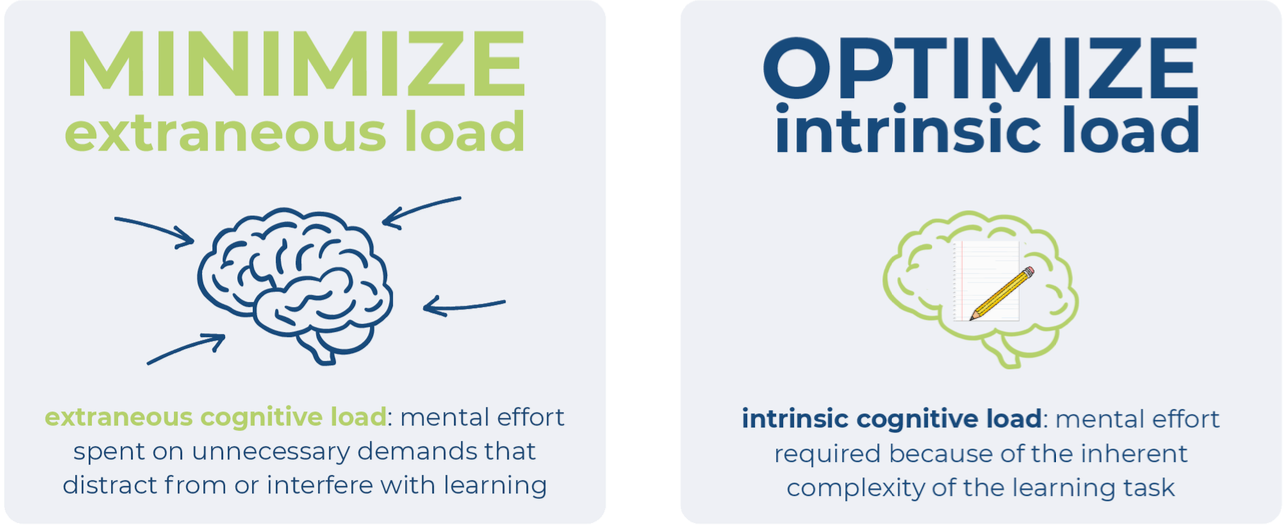
Cognitive Load Theory suggests that effective instruction should not eliminate complexity; rather, it must seek to minimize unnecessary cognitive demands so students can devote their limited cognitive resources to the learning that matters most. Sweller distinguishes between intrinsic cognitive load, the mental effort inherent to the task itself, and extraneous cognitive load, the effort created by ineffective instructional design.
While the intrinsic complexity of writing cannot be removed, thoughtful instructional design can substantially reduce extraneous load, allowing students to focus on developing increasingly sophisticated writing skills.
This principle has important implications for foundational literacy instruction. When students are asked to generate ideas, vocabulary, spelling patterns, sentence structures, and content knowledge simultaneously, working memory may become overloaded before meaningful learning occurs. In contrast, when writing is grounded in a familiar decodable text that students have already read, many of these unnecessary demands are reduced. Students already understand the topic, recognize the vocabulary, and have practiced the orthographic patterns through decoding. Rather than expending cognitive resources on generating entirely new content, they can direct their attention toward encoding, sentence construction, and communicating meaning. In this way, the decodable text serves not only as a reading resource but also as an instructional scaffold that helps to minimize extraneous load while optimizing intrinsic load.
Understanding writing through the lens of Cognitive Load Theory helps explain why instructional supports matter. It also provides a foundation for understanding the Writing Rope (Sedita, 2023), which illustrates the multiple strands students must coordinate as they develop into skilled writers.
A Framework for Integrated Literacy
Reducing unnecessary cognitive demands, however, is only part of effective writing instruction. Students must also develop the many interacting skills that proficient writing requires. Sedita's Writing Rope provides a framework for understanding those demands. Inspired by Scarborough's Reading Rope, the Writing Rope uses a similar metaphor to represent the development of skilled writing as the integration of multiple interdependent components rather than a single isolated skill. The model organizes writing into five key components (critical thinking, syntax, text structure, writing craft, and transcription), which together encompass the skills, strategies, and techniques necessary for effective written communication. As students gain experience and instruction across these components, their use of each becomes more strategic and increasingly automatic, allowing writers to focus more fully on expressing and refining ideas rather than managing individual aspects of the writing process (Sedita, 2023).
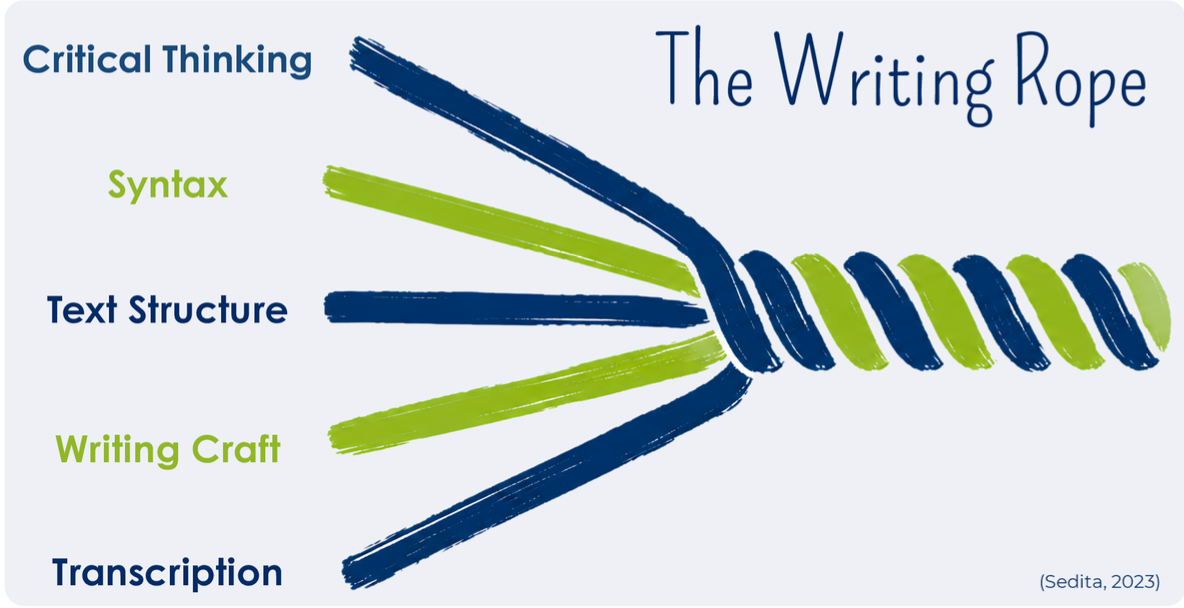
Few of these strands are automatic for beginning writers. Students must consciously coordinate transcription, language, organization, and meaning while simultaneously generating ideas. From the perspective of Cognitive Load Theory, each strand contributes to the intrinsic complexity of writing. The challenge, therefore, is not to simplify writing itself, but to provide instructional conditions that reduce unnecessary cognitive demands so students can successfully coordinate these interacting processes.
This perspective helps explain why isolated writing activities often overwhelm novice writers. When students are asked to invent ideas, retrieve vocabulary, determine spelling, organize text, and apply conventions all at once, working memory can become overloaded before meaningful learning occurs. In contrast, writing experiences built from a shared text reduce many of these competing demands. Students already possess knowledge of the topic, vocabulary, sentence structures, and orthographic patterns, allowing more cognitive resources to be directed toward developing the strands of skilled writing.
An Integrated Framework
Research has established that reading and writing develop reciprocally. Cognitive Load Theory explains why students benefit from familiar linguistic contexts, and the Writing Rope illustrates the multiple strands involved in skilled writing. Together, these ideas suggest a practical instructional question: How can teachers intentionally connect reading and writing within everyday lessons?
Decodable texts provide the missing instructional link between phonics instruction and meaningful writing. After students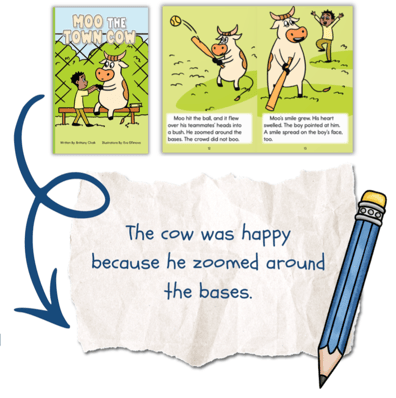 explicitly learn a phonics pattern, they apply it in connected reading through a decodable text. Rather than ending the lesson there, teachers can return to that same text, using it as the foundation for purposeful writing. Because students have already decoded the text, they enter the writing task with established knowledge of related vocabulary, orthographic patterns, sentence structures, and meaning. The reading experience becomes preparation for writing. Viewed through this lens, the decodable text becomes the instructional blueprint for writing.
This progression allows one instructional resource to support multiple literacy outcomes. Students may first encode words through dictation, then construct sentences using newly learned patterns, and eventually write responses that require comprehension, organization, and written expression.
Rather than introducing new orthographic demands during writing, the text provides a scaffold that supports successful transfer between reading and writing.
This alignment between input and output is particularly valuable for novice writers. When reading and writing draw from the same pool of familiar vocabulary, phonics patterns, and sentence structures, students experience reduced extraneous cognitive load (Sweller et al., 2011). Working memory can therefore be directed toward constructing meaning, organizing ideas, and communicating understanding instead of struggling with unfamiliar spelling patterns or vocabulary (Hochman & Wexler, 2024; Sedita, 2023).
When considered within an integrated literacy framework, decodable texts extend beyond simple reading practice. They are instructional tools that connect every stage of foundational literacy. Students move from explicit phonics instruction, to connected decoding, to purposeful encoding, all within a common linguistic context. This repeated movement between reading and writing strengthens both encoding and decoding, creating the reciprocal cycle that supports increasingly fluent reading and increasingly proficient writing (Graham & Hebert, 2011; Tierney & Shanahan, 1991).
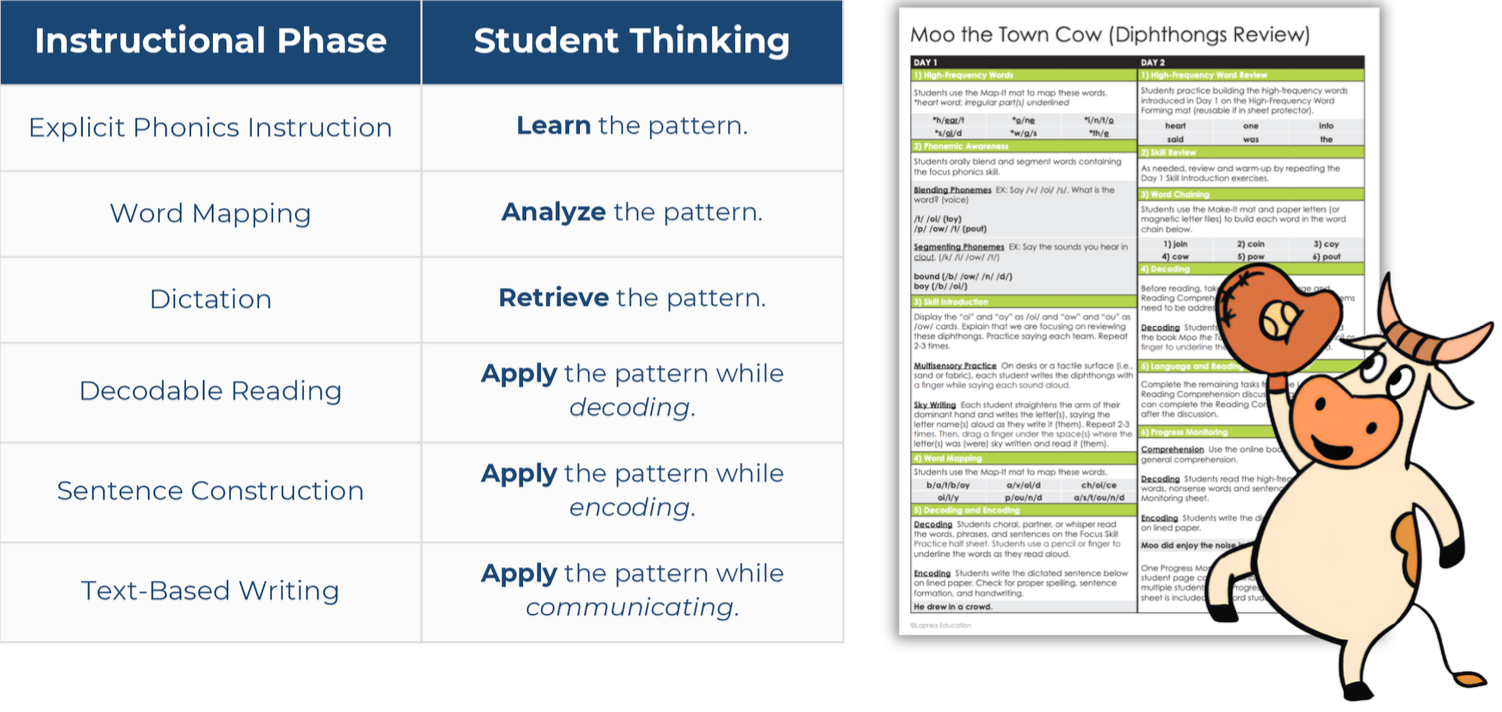
At Laprea Education, every decodable lesson is intentionally designed so that reading naturally leads to writing. Each lesson extends beyond decoding into encoding through dictation, sentence construction, and text-based writing. This intentionality allows students to retrieve and apply the same phonics knowledge repeatedly across increasingly meaningful literacy tasks.
A Blueprint for Writing
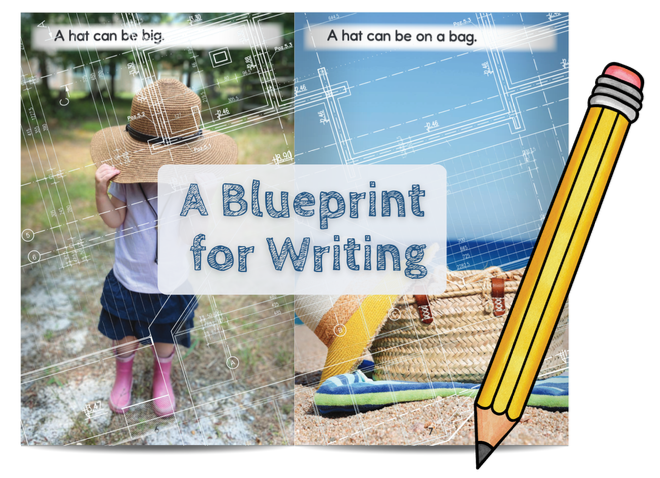
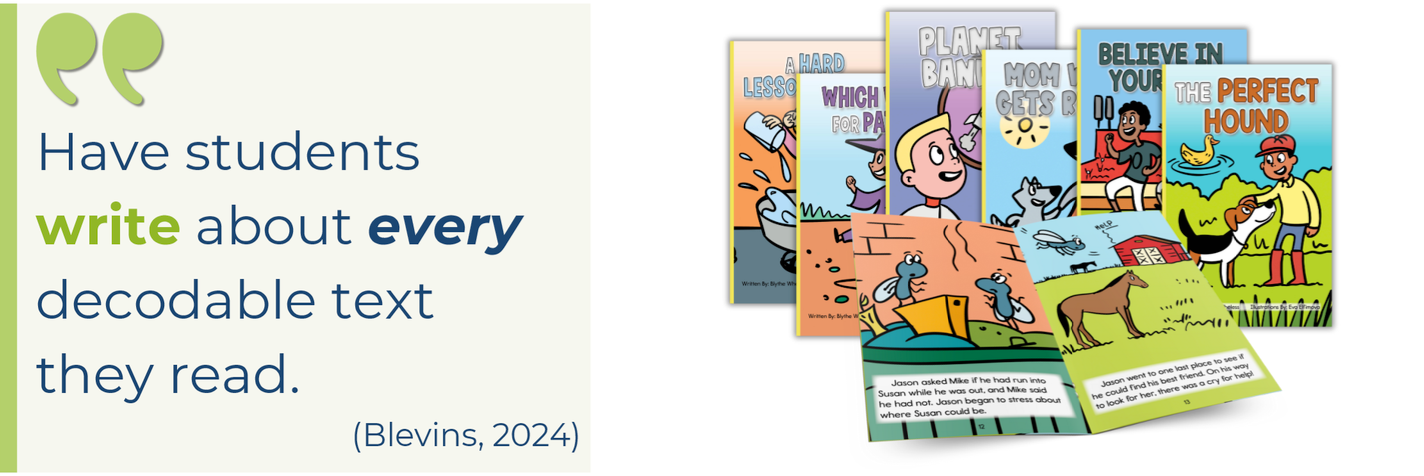
The same decodable text students use for reading becomes the blueprint for writing instruction. Rather than searching for separate writing activities, teachers can repeatedly return to the text, using its vocabulary, sentence structures, orthographic patterns, organization, and ideas as the foundation for increasingly sophisticated writing. Because students have already established a shared linguistic context through reading, they can devote more cognitive resources to developing writing itself.
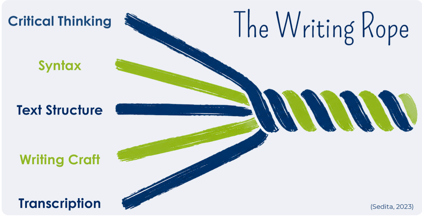 The Writing Rope (Sedita, 2023) provides a practical framework for understanding how this progression can occur. Each strand of the rope represents an essential component of skilled writing, and each can be intentionally strengthened through writing experiences built from a single decodable text.
1. Transcription
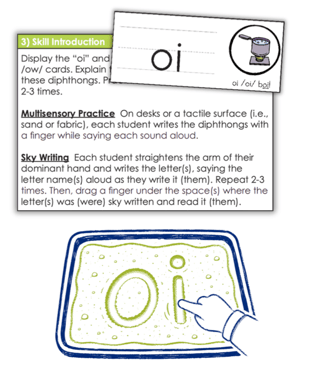 Transcription includes the foundational skills of handwriting, spelling, and eventually keyboarding that allow students to translate ideas into written language (Sedita, 2023). Although these skills may appear mechanical, they are essential because fluent transcription frees working memory for higher-level writing processes such as sentence construction, organization, and idea generation (Berninger & Winn, 2006; Graham, 2019). For beginning writers, transcription is also where the reciprocal relationship between reading and writing is most apparent. When spelling words, students rely on the same phoneme-grapheme correspondences and orthographic patterns they use to decode words when reading.
Decodable texts provide an ideal context for strengthening transcription because they contain spelling patterns students have already learned to decode. Rather than asking students to spell unfamiliar words, teachers can return to the text for word dictation, sentence dictation, handwriting practice, and guided editing. Because students are working with familiar vocabulary and orthographic patterns, they can devote more attention to accurate encoding, automatic letter formation, and spelling, establishing the transcription skills that support all later writing.
2. Syntax
Syntax refers to the way words are organized into meaningful sentences. Developing writers must learn to construct complete sentences, combine ideas, elaborate on simple statements, and manipulate sentence structures to communicate clearly (Sedita, 2023).
Strong syntax supports both reading comprehension and written expression by helping students recognize and produce increasingly sophisticated language.
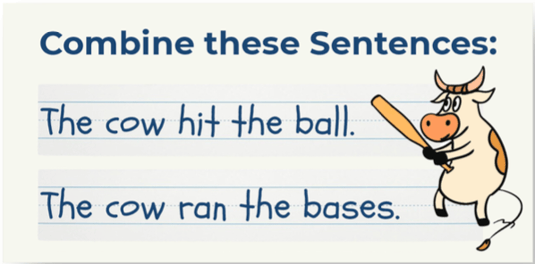 Decodable texts provide authentic models of sentence construction that students can imitate and extend. Teachers can ask students to complete sentence stems, combine short sentences with conjunctions, expand simple sentences by adding details, or imitate sentence structures found within the text. Because students already understand the story and vocabulary, they can focus on manipulating sentence structure rather than generating entirely new content.
3. Text Structure
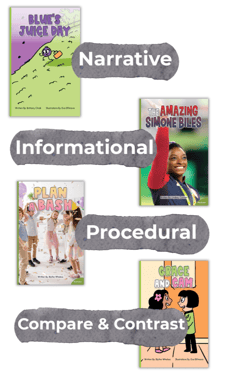 Text structure refers to the ways authors organize ideas across sentences and paragraphs. Whether students are writing narratives, informational texts, or opinions, they must learn to organize ideas logically and recognize common organizational patterns (Sedita, 2023). These skills begin developing long before students write multi-paragraph compositions.
Decodable texts naturally model organizational structures that can become templates for student writing. A narrative can be retold using beginning, middle, and end. An informational decodable can serve as the foundation for a simple report. Compare-and-contrast, sequence, and cause-and-effect structures found within the text can become graphic organizers, paragraph frames, or summary activities. Rather than inventing a new organizational structure, students learn to recognize and reproduce patterns they have already encountered during reading.
4. Writing Craft
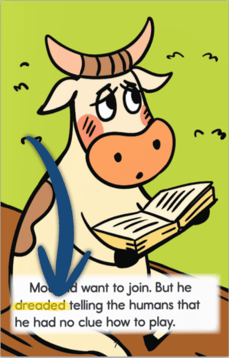 Writing craft includes the author's intentional choices about vocabulary, style, voice, and language that make writing engaging and effective (Sedita, 2023). While young writers are still developing foundational skills, they also benefit from opportunities to notice and experiment with effective writing techniques.
Decodable texts provide accessible models for exploring writing craft because their language is intentionally controlled yet purposeful. Students can identify interesting word choices, substitute more precise vocabulary, write dialogue for illustrations, or imitate sentence patterns found within the story. These activities encourage students to move beyond simply producing correct sentences toward making thoughtful choices about how language communicates meaning.
5. Critical Thinking
Critical thinking includes generating ideas, synthesizing information, summarizing, making inferences, and communicating understanding through writing (Sedita, 2023). Writing becomes a vehicle for processing ideas rather than simply recording them.
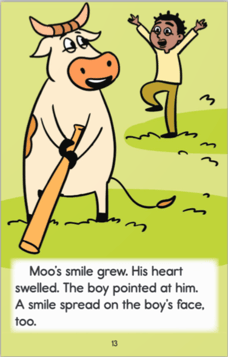 Because students have already read and discussed the decodable text, they possess the background knowledge necessary to engage in meaningful thinking. Teachers can ask students to write one-sentence summaries, explain character actions, compare ideas, justify opinions with evidence from the text, or write an additional page that extends the story. These tasks require students to retrieve, organize, and apply what they have learned while remaining grounded in a familiar linguistic context. When using a decodable as the foundation for these activities, students can devote more cognitive resources to thinking deeply about the text rather than managing unfamiliar vocabulary or content.
A Practical Solution
Reading and writing have never been separate processes. They develop reciprocally, drawing upon the same linguistic knowledge and reinforcing one another throughout literacy development. Reading provides the language, orthographic knowledge, and models that support writing, while writing strengthens reading by requiring students to actively retrieve and apply that same knowledge through encoding.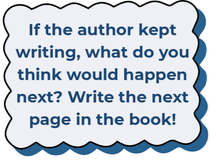
Cognitive Load Theory helps explain why this reciprocal relationship is especially important for beginning writers. When students are asked to generate ideas, vocabulary, spelling, syntax, and organization simultaneously, working memory can quickly become overwhelmed. Decodable texts offer a practical solution by providing a familiar linguistic context that reduces unnecessary cognitive demands while allowing students to focus on developing the increasingly complex skills represented in the Writing Rope.
At Laprea Education, our goal is to produce high-quality decodable texts that help students read and write in meaningful, connected ways. These texts are intentionally crafted to provide rich opportunities for students to apply phonics knowledge while also engaging with language, ideas, and structure that can be carried into writing. When reading and writing are intentionally integrated in this way, the decodable text becomes the foundation of a cohesive literacy experience in which every reading lesson naturally extends into meaningful writing. This integrated approach honors the reciprocal nature of literacy development and provides educators with a practical, research-informed framework for helping students become increasingly proficient readers, writers, and communicators.
References
Berninger, V. W. (2000). Development of language by hand and its connections with language by ear, mouth, and eye. Topics in Language Disorders, 20(4), 65–84.
Berninger, V. W., & Winn, W. D. (2006). Implications of advancements in brain research and technology for writing development, writing instruction, and educational evolution. In C. A. MacArthur, S. Graham, & J. Fitzgerald (Eds.), Handbook of writing research (pp. 96–114). Guilford Press.
Blevins, W. (2024). A fresh look at phonics (2nd ed.). Corwin.
Ehri, L. C. (2014). Orthographic mapping in the acquisition of sight word reading, spelling memory, and vocabulary learning. Scientific Studies of Reading, 18(1), 5–21.
Graham, S. (2019). Changing how writing is taught. Review of Research in Education, 43(1), 277–303.
Graham, S., & Hebert, M. (2011). Writing to read: A meta-analysis of the impact of writing and writing instruction on reading. Harvard Educational Review, 81(4), 710–744. Carnegie Corporation of New York.
Graham, S., Bollinger, A., Booth Olson, C., D'Aoust, C., MacArthur, C., McCutchen, D., & Olinghouse, N. (2012). Teaching elementary school students to be effective writers: A practice guide (NCEE 2012-4058). National Center for Education Evaluation and Regional Assistance, Institute of Education Sciences.
Hochman, J. C., & Wexler, N. (2024). The writing revolution 2.0: A guide to advancing thinking through writing in all subjects and grades. Jossey-Bass.
Moats, L. C. (1995). Spelling: Development, disability, and instruction. York Press.
Philippakos, Z. A., & MacArthur, C. A. (2023). Developing strategic young writers through genre instruction: Resources for grades K–8. Guilford Press.
Sedita, J. (2023). The writing rope: A framework for explicit writing instruction in all subjects. Brookes Publishing.
Sweller, J. (1988). Cognitive load during problem solving: Effects on learning. Cognitive Science, 12(2), 257–285.
Sweller, J., Ayres, P., & Kalyuga, S. (2011). Cognitive load theory. Springer.
Tierney, R. J., & Shanahan, T. (1991). Research on the reading-writing relationship: Interactions, transactions, and outcomes. In R. Barr, M. L. Kamil, P. Mosenthal, & P. D. Pearson (Eds.), Handbook of reading research (Vol. 2, pp. 246–280). Longman.
.png?width=960&length=960&name=Untitled%20design%20(57).png)
.png?width=960&length=960&name=Untitled%20design%20(64).png)
.png?width=960&length=960&name=Landing%20Page%20Backgrounds%20(3).png)