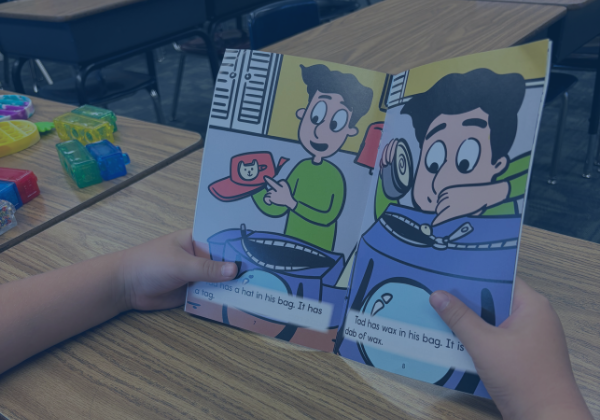

Small-group reading instruction is where the magic happens. It's where a teacher can sit close enough to hear exactly what a student is doing, respond in the moment, and give the precise instruction the group needs. But getting to that moment takes real work, and once the lesson ends, the next question is: What are the other kids doing while this small group is happening?
Too often, the answer means building four or five new activities every single week, but that's not sustainable. One of the best ways to work smarter is to reuse the materials you already have, starting with the decodable books students have already read with you. Instead of putting that book away after the small-group lesson, give it a new purpose.
First, what actually makes a text "decodable"?
A book isn't decodable just because the cover says so. Decodability isn't about how a text looks on the surface. It's about how well its words match the phonics patterns a specific group of students has already been explicitly taught. Without knowing the phonics scope and sequence a text was written to match, you can't say with certainty whether it's decodable for your students. So the first question is always: Does this match what my students have been taught?
Why rereading a familiar text is worth it
When students read a word, their brains connect three things: the sounds, the letters that represent them, and the meaning. This is called orthographic mapping, and it's how a word moves into long-term memory so a student can eventually recognize it automatically instead of sounding it out each time. Think about a time you were driving to a new place. You had to follow directions and take the trip one turn at a time. But if you drove that same route tomorrow, it would already be easier. By the fifth time, it's second nature. Every rereading of a familiar decodable gives the brain another chance to strengthen that same routine. Students use phonemic awareness and phonics knowledge to build increasingly automatic connections rather than relying on visual memorization. That's why a decodable's job isn't finished after the first time they’ve read it.
Five ways to give one decodable a new purpose
Each activity below targets a different area of literacy, and none require building something new each week. The goal is more purposeful practice, not more planning.
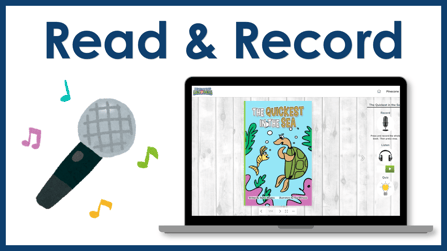 1. Fluency Remix. Once students can read a text accurately with support, it becomes ideal for purposeful rereading focused on smoothness and expression. They might record themselves reading and listen back for one specific thing, such as accuracy, pausing at punctuation, or expression. They could also practice with a partner through echo, choral, or rally reading, gradually working toward more independence.
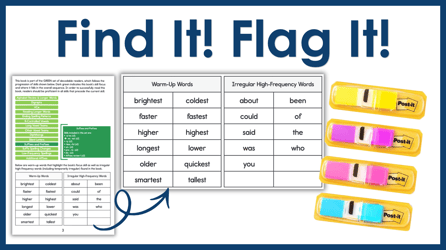 2. Word Detective. Students search the familiar text for words containing a specific phonics pattern. They can then record, flag, or sort what they find. The important part is that this isn't just a visual hunt. After finding a word, students read it aloud and identify the sound the target spelling represents, which keeps letters connected to sounds and supports orthographic mapping.
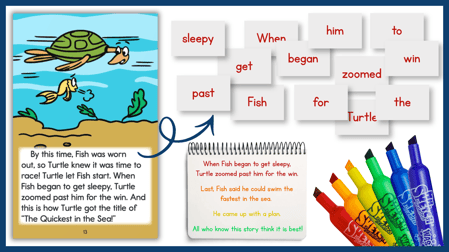 3. Sentence Scramble. Students rebuild mixed-up sentences that have been taken directly from the book. They use capitalization, punctuation, word order, and meaning to return it to its original sentence. This supports syntactic awareness, an understanding of how words work together, which matters because a student can decode every word correctly and still struggle if they can't assemble those words into a coherent idea. Using a familiar sentence gives students built-in support because they already know the story.
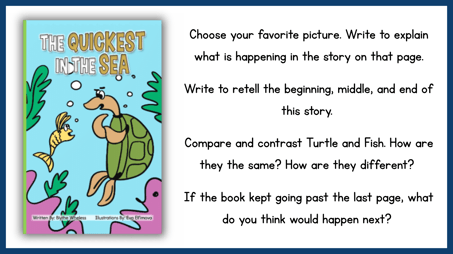 4. Write About It. Students answer a focused prompt using ideas from the text, such as a sentence about a character, a simple retell, or a prediction. Since they are already familiar with the characters and events, they can focus more on organizing and expressing an idea rather than decoding new text. The key is choosing a prompt students can answer independently, without an adult beside them.
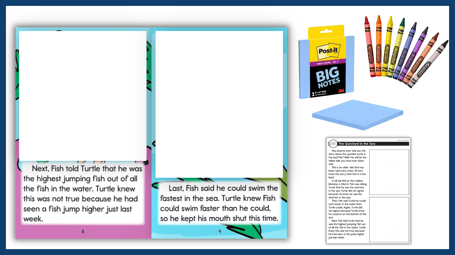 5. Illustrate It. Students choose a sentence or short passage and draw an illustration that accurately represents its meaning, returning to the words to decide who or what belongs in the picture and what's happening. Covering a book's original art with sticky notes works well: Students draw their own version then lift the note to compare it with the author's illustration. The goal isn't matching the original exactly; it's building a mental image that supports comprehension. Picture-free passages are another great way to bring this strategy into your classroom.
One book, five new purposes
You don't need to introduce all five activities at once. Teach one routine explicitly and practice it together. Once students know it, you can reuse it again and again with different texts so the planning you do once keeps paying off. The next time you finish a decodable with a small group, pause before putting it away and ask: What else could my students do with this text?
Need decodable books for your classroom? Shop Developing Decoders today.